
Heart failure: How physical exertion reveals hidden changes in the body
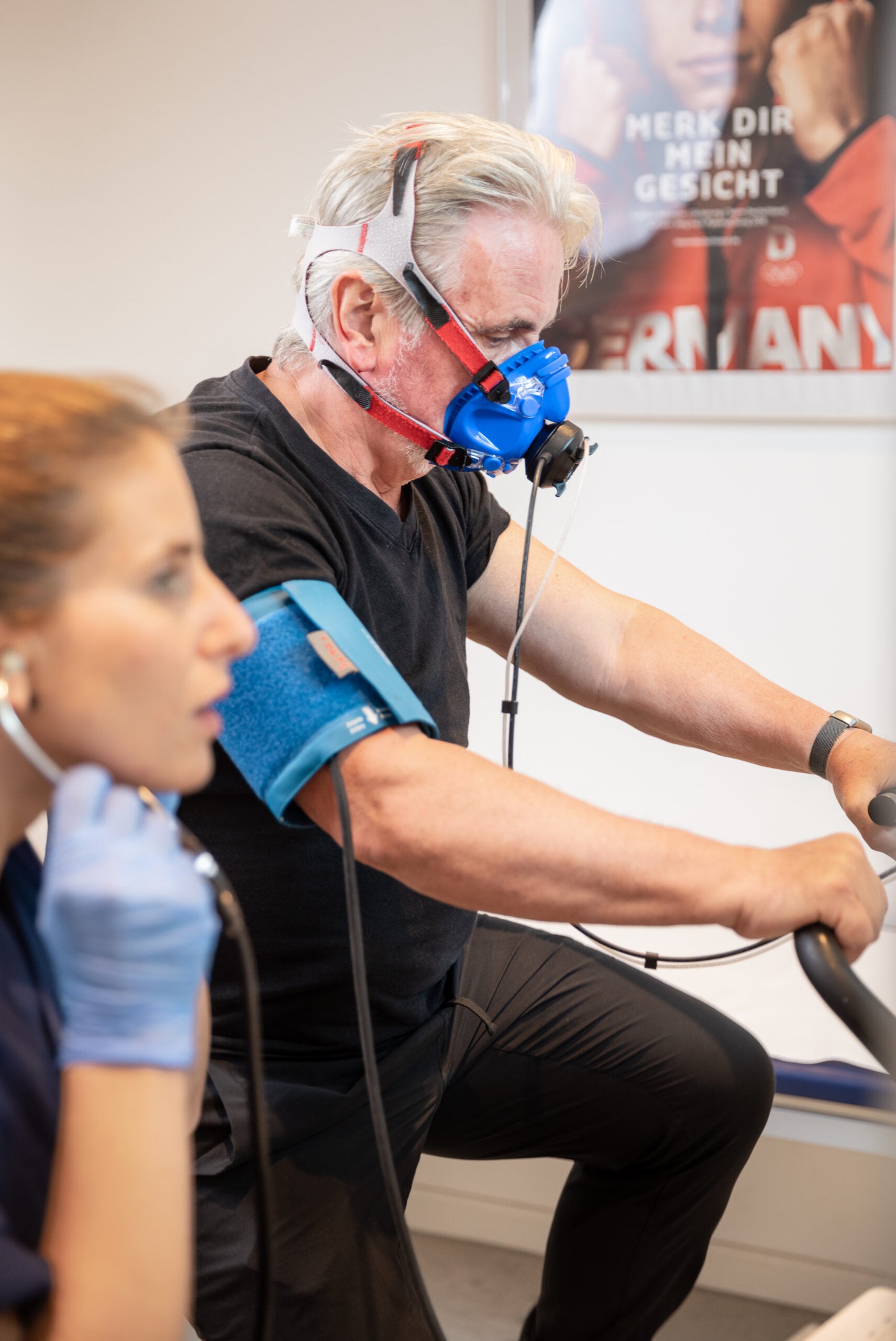
Chronic heart failure affects millions of people worldwide and severely limits their physical capacity. In this study, we collaborated with colleagues from the University of Greifswald to investigate how a single bout of brief physical exertion affects certain metabolic and immune processes in patients with heart failure.
The focus was on tryptophan, an amino acid found in food. Tryptophan can be converted into different substances in the body—some of which are protective, while others promote inflammation. We investigated whether the way tryptophan is processed by the metabolism changes after a single, precisely defined physical exertion. The study examined patients with heart failure and a control group whose participants were of a similar age and gender composition.
While participants in the control group tended to process tryptophan into the protective metabolite kynurenate, patients with heart failure produced substances associated with inflammation and cell damage (quinolinate). At the same time, patients with heart failure experienced an increase in the blood levels of certain immune system messenger substances (interleukin-1 beta and interleukin 12p70) and in the number of natural killer cells after physical exertion. We were able to show that, under these pro-inflammatory conditions, natural killer cells can promote the conversion of tryptophan into the rather unfavorable quinolinate.
Does that mean exercise is harmful for patients with heart failure?
No! Many studies have shown that regular physical activity strengthens heart health and reduces the burden of disease and the risk of death. However, our data shows that a single bout of exercise apparently triggers different biological responses than in healthy individuals. Before the exercise test, these differences were not apparent in the patients compared to the control group. We therefore want to use stress tests in the future to detect such unfavorable metabolic patterns at an early stage and thus enable improved risk stratification. This could help to take countermeasures at an early stage, before damage to the heart or blood vessels occurs.
In further studies, we are also investigating whether regular physical training improves the body's ability to cope with a single stress stimulus in patients with existing heart failure.
collaborative partner
PD Dr. Martin Bahls, University of Greifswald